
CasaOS is an open-source, user-friendly home cloud system designed to simplify self-hosting. It features a sleek web-based interface where you can easily manage your apps, files, and services all from one dashboard. Whether you’re setting up a media center, file server, or personal cloud, CasaOS provides a lightweight and modern solution.
To make deployment faster and more efficient for our users, we’ve created a predefined template of CasaOS, now available on the VPSie platform. With this one click template, you can launch a fully configured CasaOS instance in just minutes no manual setup needed.
Step 1: Select CasaOS from Marketplace Apps
Log in to your VPSie control panel and click on “New Server” to start creating a new instance. This will take you to the server deployment section and then go to Marketplace, where you’ll find a variety of pre-configured, one-click deployable services.
Scroll through the list or use the search bar to locate CasaOS. Once found, click on it to proceed with the setup.

Step 2: Select a VPSie Data Center
Choose a data center location that is closest to your customers, not necessarily to you. For instance, if you’re located in Europe but most of your clients are based in the United States, selecting a U.S. data center will help ensure better performance and lower latency for them.

Step 3: Choose Your Server Package
Select the server package that best fits your needs. Start by choosing a plan category, then pick a specific configuration based on your application or business workload.
Each package offers a different combination of CPU, RAM, and storage allowing you to scale resources according to your performance requirements and budget.

Step 4: Configure Server Network
Decide how your CasaOS server will connect to the network. You can choose to assign a public IPv4, IPv6, or both, depending on your needs. If your setup involves communication between multiple VPSie instances, you can also add a private IP for internal networking.
This provides the flexibility to run CasaOS as a public-facing cloud system, a private internal server, or both depending on how you plan to use it.

Optional: Add SSH Key, Startup Script, or Extra Storage
At this stage, you have the option to enhance your deployment by adding an SSH key for secure access or a startup script to automate initial setup tasks. You can use existing ones or create new entries as needed. This step is entirely optional feel free to skip it if these features aren’t required for your setup.
Additionally, you can attach extra storage to your server beyond what’s included in your selected package. Simply choose the desired storage type from the dropdown menu and specify the size you need to allocate additional space.

Customize Hostname, Set Password & Enable Backup
Under the Hostname tab, you can assign a custom hostname to your CasaOS server. By default, VPSie will generate one automatically, but you’re free to personalize it.
A default password will also be created for your server. If you prefer to use your own, head to the Password Configure tab, select Custom, and enter your preferred password.
For better organization, we recommend adding a note and tags to help you easily identify your CasaOS server later.
Finally, for added security and peace of mind, we highly recommend enabling Automatic Backup to protect your data.

Deploy Your CasaOS Server
Once all configurations are set, simply click on the Deploy Server button to begin creating your CasaOS instance. VPSie will handle the rest within a few minutes, your fully configured CasaOS server will be up and running.
After deployment is complete, your CasaOS server will appear in your server list, ready for use.

Once the deployment is complete, you’ll receive all the server details via email.
To access the CasaOS Web UI, simply copy your server’s IP address and enter it in your browser using the following format:
http://your-server-ip
Replace your-server-ip with the actual IP provided. Once loaded, you’ll be able to log in and start using your CasaOS environment right away.

Now you’ll be prompted to create your CasaOS account. Just enter a username and password of your choice to complete the setup and start using your personal cloud dashboard.

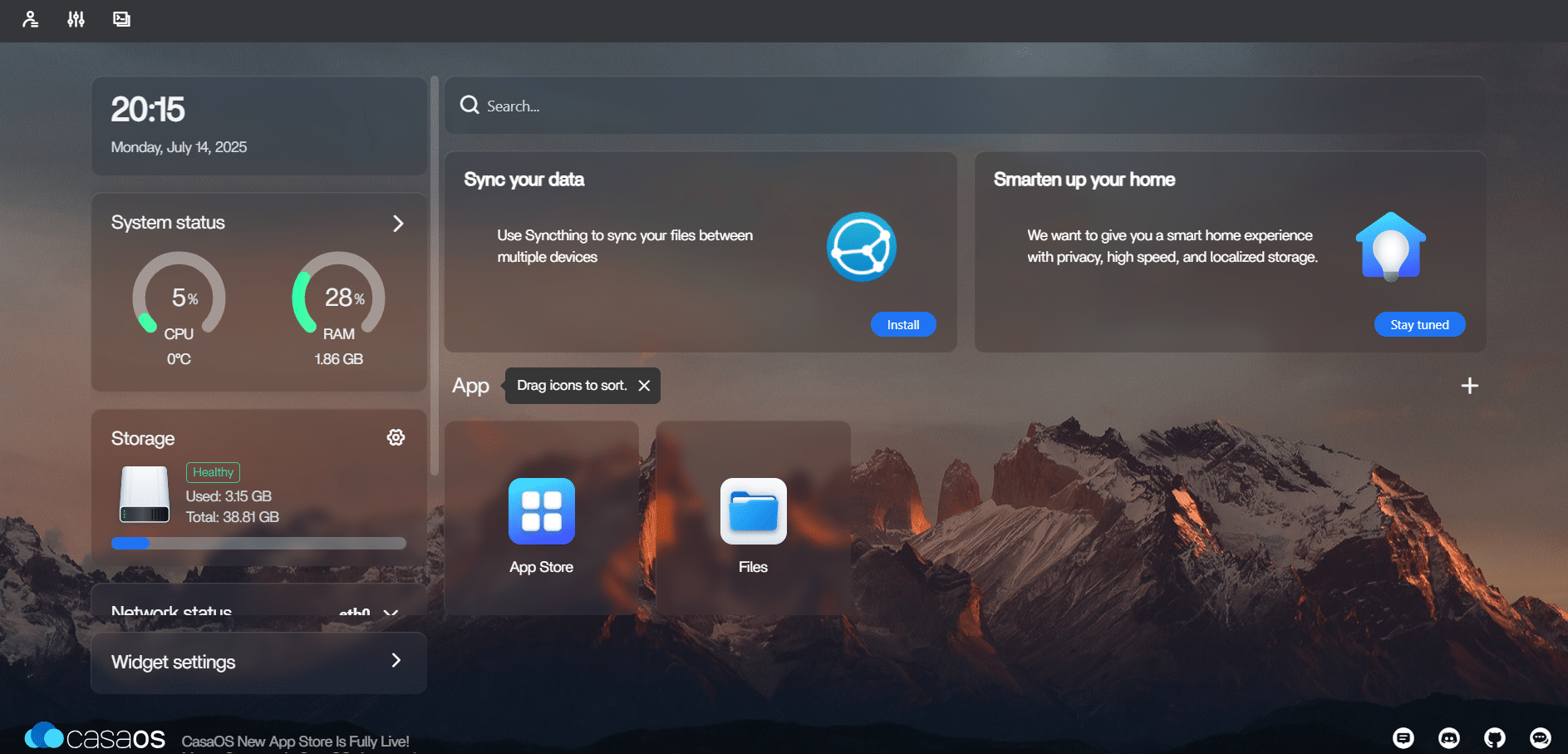
You’re now inside the CasaOS dashboard! Explore the available features, browse through the built-in app store, manage your files, and start using your personal cloud server with ease.